
The short answer: an algorithm is very good at making your track measure correctly. It is not able to tell you what is wrong with it. If your mix is finished and you need it loud, level-matched and compliant with streaming targets, an automated master will often get you there. If something about the track still bothers you and you cannot name what, no amount of automated processing will fix it — because the problem is a decision, not a setting.
This is not a piece arguing that machines are bad. We use plenty of them. It is an honest account of where the line actually falls, written by people who master records for a living and who lose work to automated services every week.
What an algorithm genuinely does well
Automated mastering has got good, and pretending otherwise helps nobody. Here is what it does properly:
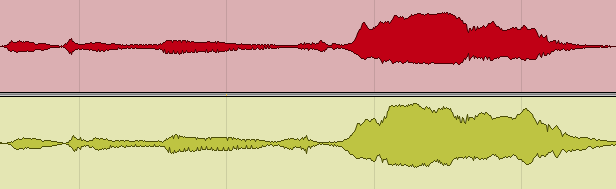
- Loudness and true-peak targets. Hitting −14 LUFS integrated with a −1 dBTP ceiling is arithmetic. A machine does arithmetic perfectly, every time, at three in the morning.
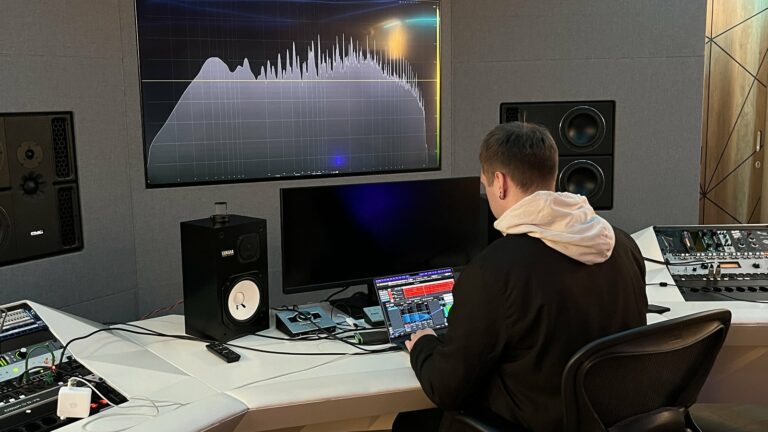
- Broad tonal matching. Given a reference, it can pull your spectrum towards that curve. If your mix is 3 dB heavy at 200 Hz compared to the reference, it will find that and reduce it.
- Consistency across an album. Level-matching twelve tracks so no one song jumps out is tedious, mechanical work, and automation is genuinely better at it than a tired human.
- Speed and price. Seconds, for free or nearly free. Nobody is going to beat that, and we are not going to try.
If that describes your need — a finished, well-balanced mix that needs to be loud and compliant — use the automated tool. We have written a longer breakdown of the category in automated mastering software, and our own guide to the targets themselves in how loud should my master be.

What it cannot do, and why
Every one of the following is a real message we have received, and none of them is a problem an automated master can solve.
“The vocal disappears in the chorus”
A machine sees a spectrum. It does not know that the thing vanishing is the vocal, that the vocal is the reason the song exists, or that the guitar doubling that arrives in the chorus is what buried it. Turning the whole 2–4 kHz band up makes the cymbals harsh and the vocal only slightly clearer. The fix is a decision about which element loses: the guitars come down, or the double gets filtered, or the vocal gets its own pocket carved. That is a judgement about the music, not a measurement of it.
“It sounds fine in headphones and wrong in the car”
This is almost always a low-end problem, and almost always a problem of arrangement rather than level. The kick and the 808 are occupying the same fundamental, the phase relationship between them changes with playback system, and one room hides it while another exposes it. An algorithm matching your spectrum to a reference will not separate two sounds that were never separated in the first place.
“Make it sound like this reference”
Spectral matching gets you the shape of the reference. It does not get you the reference. What you are usually hearing in that record is arrangement, performance, the specific way the drums were recorded, and forty other decisions that happened long before mastering. A human will tell you which parts of the gap are reachable in a master and which are not — and that answer saves you money, because you stop paying to master a problem that lives upstream.
“Something is off and I cannot hear what”
The most common message of all, and the one that is pure diagnosis. Nobody has yet built a tool that listens to your song and says the problem is that the second verse has the same energy as the first, so the drop stops landing. That sentence requires understanding what the song is trying to do.
Side by side
| Automated mastering | Human engineer | |
|---|---|---|
| Loudness / true-peak targets | Reliable and instant | Reliable, plus a judgement about how loud this song should actually be |
| Broad tonal balance | Good against a reference | Good, and knows when the reference is the wrong target |
| Telling you what is wrong | No | Yes — this is most of the value |
| Fixing a mix problem in the master | No | Partly, and will say honestly when it needs a remix instead |
| Revisions | Re-run with different settings | Six rounds, against your actual notes |
| If it comes back wrong | Try again yourself | We fix it, or refund you |
| Cost | $0–25 per track | From $79 per song here |
How to decide, in four questions
- Can you name the problem? If yes and it is “not loud enough”, an algorithm will do. If you cannot name it, a machine cannot either.
- Is the mix finished, or is it finished-ish? Mastering is a finishing process, not a rescue. If you are hoping mastering fixes the balance, what you actually need is a mix.
- Does this release matter? A demo, a rough for a collaborator, a reference bounce — automate it. A single you are putting money behind deserves ears.
- Do you want to be told the truth? An algorithm will process whatever you feed it without comment. A good engineer will tell you when the track is not ready, which is annoying and worth more than the master.
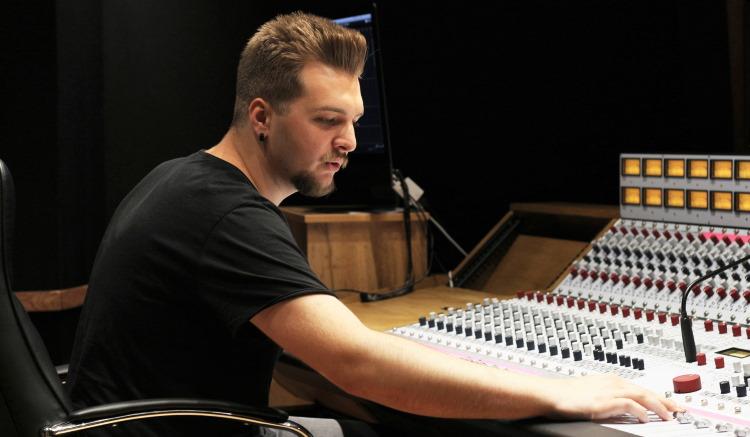
Where we sit, honestly
We are not the cheapest and we are not trying to be. Mastering here starts at $79 per song, comes back in two to three days, includes six rounds of revisions, and is done by a named engineer whose credits you can check on our credits page. If it is not right after five rounds, you get your money back — the full policy is in our terms.
We also use automation ourselves, in the places where it is the better tool: level-matching an album, checking compliance before delivery, catching a true-peak overshoot a human ear would miss. The question was never machine versus human. It is which decisions should be made by measurement and which should be made by someone who has listened to your song and understood what it is trying to do.
If you are not sure which side of that line your track falls on, send it to us in the chat and an engineer will tell you. That part is free, and there is no order to place first.
Send us a song you are working on
A rough demo is fine — it does not need to be mixed. A named engineer listens on studio monitors and writes back exactly what is holding the track back, and what to do about it.
- Usually within two working days
- No card, no obligation
- 11,000+ projects behind the answer