
Short answer: if you read one mixing book, make it Mixing Secrets for the Small Studio by Mike Senior (3rd edition, 2025) or The Mixing Engineer’s Handbook by Bobby Owsinski (6th edition, 2025). Add Mix Smart by Alex Case for depth on each processor, Mastering Audio by Bob Katz if you master, and the Master Handbook of Acoustics for your room. Books give you the framework; the skill still comes from mixing a lot of songs.
There are a lot of books on mixing, but only a few have become standard reading for musicians and mixing engineers. Below are the ones we’d recommend, with the current edition and publisher of each, checked on the publishers’ and authors’ own sites on 13 November 2026. Several of them got new editions in the last two years, so if your copy is older, it’s worth knowing what changed.
| Book | Edition | For |
|---|---|---|
| Mixing Secrets for the Small Studio, Mike Senior | 3rd, Focal Press, 2025 | Home-studio mixers, first book |
| The Mixing Engineer’s Handbook, Bobby Owsinski | 6th, BOMG, 2025 | First book, pro interviews |
| Mix Smart, Alex Case | 1st, Focal Press, 2011 | Depth on EQ, compression, delay, reverb |
| Mixing and Mastering in the Box, Steve Savage | 1st, Oxford University Press, 2014 | Working entirely in a DAW |
| Step By Step Mixing, Björgvin Benediktsson | 2nd, Audio Issues, 2019 | A simple routine with stock plugins |
| Your Mix Sucks, Marc Mozart | Waves Edition, ebook | Mixers with some DAW experience |
| The Mastering Engineer’s Handbook, Bobby Owsinski | 5th, BOMG, 2024 | An overview of mastering |
| Mastering Audio, Bob Katz | 3rd, Focal Press, 2015 | Mastering in depth |
| Master Handbook of Acoustics, F. Alton Everest and Ken C. Pohlmann | 7th, McGraw Hill, 2021 | Treating your room |
Editions from the publishers’ and authors’ sites: Routledge, bobbyowsinski.com, McGraw Hill, Waves, Audio Issues. BOMG is Bobby Owsinski Media Group, the author’s own publishing company.
Why read a book on mixing?
Mixing is learned by doing: mixing many songs, comparing them with records you love and hearing what’s different. But without the theory, gaps in your knowledge keep pulling you back. A good book explains what each tool does, how sound behaves in a room and how experienced engineers make decisions. That framework turns hours of practice into progress instead of repetition, and even engineers with years of work behind them keep reading.
The Mixing Engineer’s Handbook and other books by Bobby Owsinski
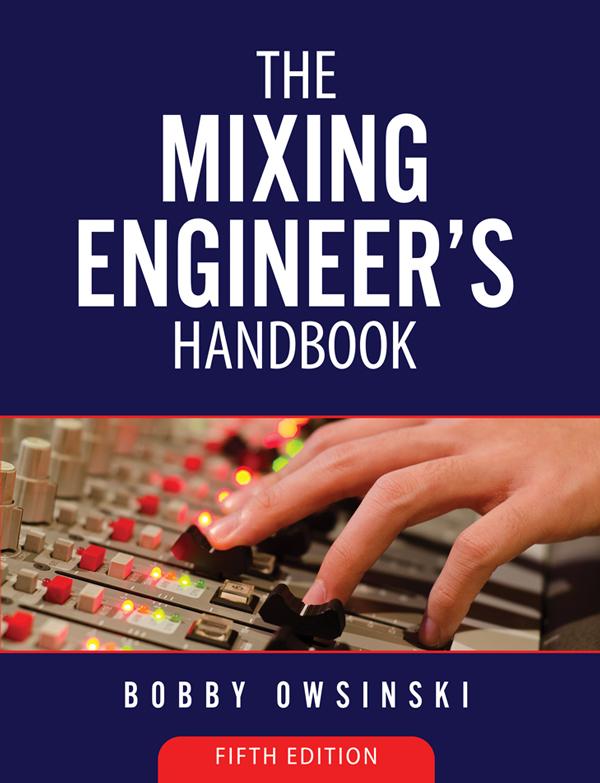
Bobby Owsinski is a producer and engineer who has written a long series of books on recording, mixing, mastering and the music business. The Mixing Engineer’s Handbook is the best known of them and is often the first mixing book people buy. The cover above is the 5th edition. The current one is the 6th edition (October 2025), published by his own company, Bobby Owsinski Media Group. According to the author’s site, it adds chapters on “intelligent” plugins and on saturation, and covers Dolby Atmos and Sony 360 Reality Audio.
The book has two halves. The first walks through the mixing process: balance, panning and stereo, EQ, compression and other dynamics, effects, and getting the mix ready for mastering. The second is a collection of interviews with well-known mixing engineers about how they work. It’s easy enough for a beginner and still useful later, which is why it’s so often recommended as the one book to start with. Source: bobbyowsinski.com.
The Music Mixing Workbook and The Mastering Engineer’s Handbook


The Music Mixing Workbook (2021) is the practical companion to the Handbook: hands-on exercises to train the skills the Handbook describes.
The Mastering Engineer’s Handbook is now in its 5th edition (November 2024); the cover above shows the 4th. The author’s announcement lists updated vinyl mastering, Dolby Atmos and 360 Reality Audio, and new interviews. There’s also The Recording Engineer’s Handbook, 5th edition (2023), if you record as well as mix. The author’s site, bobbyowsinski.com, lists all his books.
Mix Smart by Alex Case
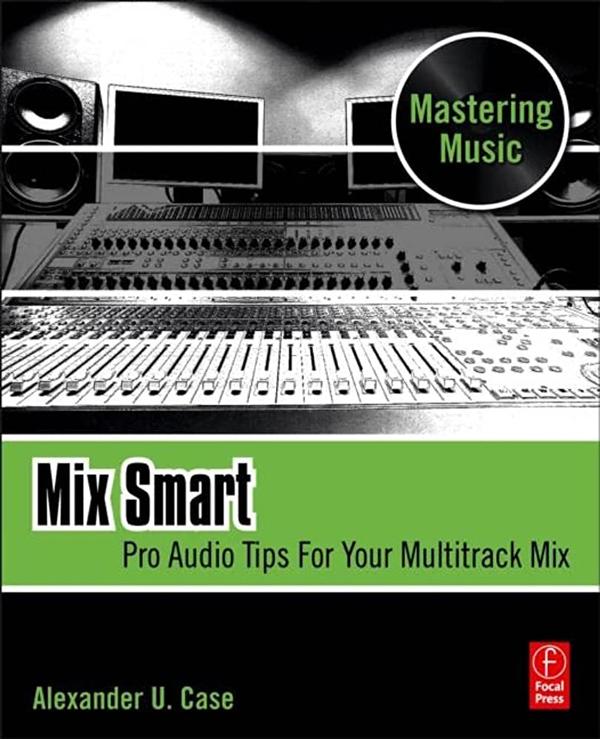
The full title is Mix Smart: Pro Audio Tips for Your Multitrack Mix (Focal Press, 2011, now part of Routledge). Alex Case teaches sound recording technology at the University of Massachusetts Lowell, and the book reads like a thorough course. It goes through each type of processing in detail, applied to the main instruments of a pop or rock mix:
- EQ
- Distortion
- Compression and limiting
- Expansion and gating
- Delay
- Reverb
It’s not a light read for a complete beginner, because Case goes deep into the technical side and explains the acoustics behind each effect. If you want to really understand why a setting works, it’s worth the effort. His earlier book, Sound FX: Unlocking the Creative Potential of Recording Studio Effects (2007), covers the same processors from the creative side. Source: Routledge.
- Usually within one working day
- No card, no obligation
- 11,000+ projects behind the answer
Mixing Secrets for the Small Studio by Mike Senior

Mike Senior is a mixing engineer, the book is part of the Sound On Sound book series, and it’s written for people mixing in a home or project studio. It goes in the order you actually work: getting reliable monitoring in an imperfect room, preparing the multitrack, building the balance with compression and EQ, and then adding reverb, delay and other effects.
The 3rd edition came out in September 2025 from Focal Press (Routledge). Routledge’s description says it draws on the techniques of more than 200 producers and adds topics such as loudness normalisation, phase linearisation, oversampling, mixing from stems and analogue summing. If you have the 1st or 2nd edition, the loudness material alone is a reason to update.
The book’s companion site, cambridge-mt.com, has a large free library of multitracks in many styles to practise on. It’s one of the most useful free resources for learning to mix. Mike Senior’s Recording Secrets for the Small Studio (2nd edition, 2022) does the same job for recording. Source: Routledge.
Mixing and Mastering in the Box by Steve Savage
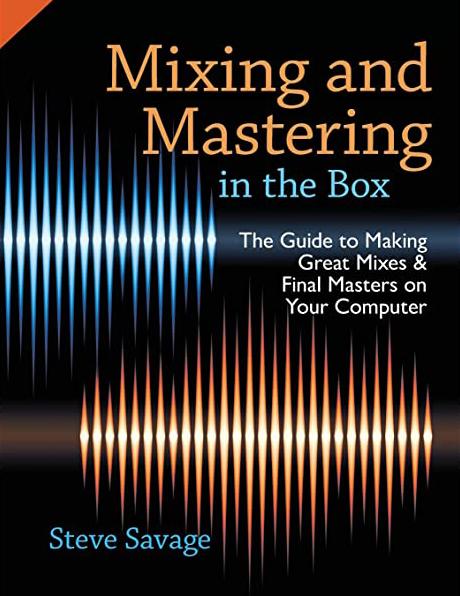
The full title is Mixing and Mastering in the Box: The Guide to Making Great Mixes and Final Masters on Your Computer (Oxford University Press, 2014). Steve Savage is a producer and engineer, and the book covers mixing and mastering done entirely inside a DAW: setting up, approaching a mix, the main processors and mastering your own music.
It’s written in a friendly, conversational way, so if dry technical books put you off, start here.
Step By Step Mixing by Björgvin Benediktsson
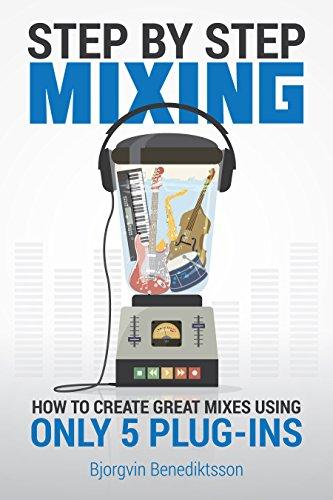
The full title is Step By Step Mixing: How to Create Great Mixes Using Only 5 Plug-ins, and the current version is the 2nd edition, self-published through the author’s site Audio Issues. It’s for a specific problem: if you don’t have a routine, and you’re never sure which plugin comes next or why, this book gives you one. It’s built around five types of processing:
- EQ
- Compression
- Reverb
- Delay
- Saturation
It uses stock plugins, so you don’t need to buy anything to follow it, and it covers more than the five tools in the title, including working with reference mixes and mixing on headphones. Source: Audio Issues.
Your Mix Sucks by Marc Mozart
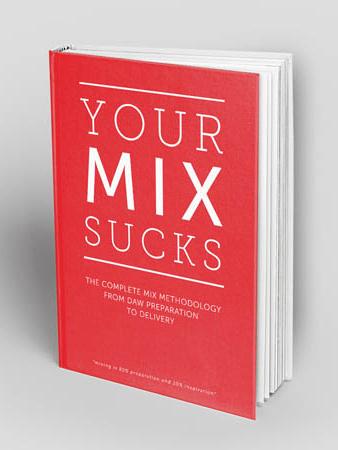
Marc Mozart is a songwriter and producer, and the book is a complete walk-through of a mix, from preparing the multitrack to the finished mix. The current Waves Edition is an ebook sold on Waves’ site and uses Waves plugins in its examples, but the methods work in any DAW with any plugins. You can read more about it, and see the contents, on waves.com.
It’s aimed at people who already have some experience in a DAW, rather than complete beginners.
Books on mastering, recording and acoustics
- Mastering Audio: The Art and the Science, Bob Katz. 3rd edition, Focal Press, 2015. The in-depth book on mastering, including loudness measurement. Routledge
- Master Handbook of Acoustics, F. Alton Everest and Ken C. Pohlmann. 7th edition, McGraw Hill, 2021. Room acoustics and studio design. Your room decides what you hear, and so what you decide in a mix. McGraw Hill
- Modern Recording Techniques, David Miles Huber, Emiliano Caballero and Robert E. Runstein. 10th edition, Focal Press, 2024. A broad reference on recording and production, including DAWs, MIDI 2.0 and Dolby Atmos. Routledge
There are many more
- The Art of Mixing: A Visual Guide to Recording, Engineering, and Production, David Gibson. Now in its 4th edition (Routledge, 2026). Gibson explains a mix with 3D visual models of where each sound sits. Routledge
- Zen and the Art of Mixing, Mixerman. The last Hal Leonard edition is from 2014. A 4th edition, published by the author, came out as an ebook in November 2026.
- Mixing with Your Mind: Closely Guarded Secrets of Sound Balance Engineering, Michael Paul Stavrou. Flux Research, 2003. An unusual book about the mindset and listening side of balance engineering.
You’ll probably read several before one becomes your favourite. The best teachers are still your ears, your persistence and a lot of mixing.
How to get more out of a mixing book
- Read one chapter, then mix. Take a multitrack, for example from the Mixing Secrets library, and try what you just read on it the same day.
- Compare at the same loudness. When you test a technique, match the level before and after, because louder always sounds better at first.
- Use references. Put a released song you like next to your mix and listen for the differences the chapter talked about.
- Read loudness chapters critically. Older books were written before streaming normalisation. There’s no single loudness target: -14 LUFS is only the level Spotify plays songs back at, and released music ranges from about -20 to -5 LUFS. Our guide on how loud a master should be explains it.
- Get feedback. A book can’t hear your mix. Send it for a free track review and an engineer will tell you what to work on next.
| Look for | Why it matters | Skip |
|---|---|---|
| Principles | Principles over settings: balance, space and dynamics don’t change with software versions. | Books built around specific plugin presets. |
| Listening | Knowing what to listen for is the real bottleneck. | Chapters that only describe processor controls. |
| Acoustics | Your room decides what you can hear. | Nothing. This is the most under-read topic. |
| Interviews | Engineer interviews show how decisions are made under real constraints. | Gear lists presented as method. |
| New editions | Loudness normalisation changed mastering advice. | Old loudness chapters that chase one number. |
What separates a mixing book you’ll keep from one you’ll shelve.
Learning to mix, or releasing a song now?
Learning to mix well takes years of books, courses and practice, and your first mixes won’t be perfect. That’s normal. If you’re studying, keep going: our mixing tips, whether artists can learn to mix their own music and mixing on headphones are good next reads.
If you have a song you want to release now, you don’t have to wait until you’ve finished the reading list. An engineer can mix it while you keep learning.
Rather have an engineer take it from here? We can mix your song for you from $113 per song, or mix and master it from $133, 2–3 days per song with 6 revision rounds included. Mastering alone is $50.
Mixing books FAQ
What is the best book on mixing?
For most people, Mixing Secrets for the Small Studio by Mike Senior (3rd edition, 2025) or The Mixing Engineer’s Handbook by Bobby Owsinski (6th edition, 2025). Senior is more hands-on for home studios, Owsinski gives a broad overview plus interviews with professional mixers.
What are the best books on mixing and mastering?
For mixing, the two above plus Mix Smart by Alex Case. For mastering, Mastering Audio by Bob Katz for depth and The Mastering Engineer’s Handbook by Bobby Owsinski (5th edition, 2024) for an overview. Mixing and Mastering in the Box by Steve Savage covers both in one book.
Can you learn mixing from books?
You can learn the framework, which is what turns practice into progress. The skill itself comes from mixing many songs and comparing them with references. Reading tells you what to listen for while you do it.
Is there a new edition of The Mixing Engineer’s Handbook?
Yes. The 6th edition came out in October 2025 from Bobby Owsinski Media Group. It adds chapters on “intelligent” plugins and saturation and covers Dolby Atmos and Sony 360 Reality Audio.
Are older mixing books still useful?
Mostly, yes. Balance, EQ and dynamics advice ages well. Be careful with loudness chapters written before streaming normalisation: there is no single loudness target, and -14 LUFS is only the level Spotify plays songs back at.
Should I read about acoustics?
Yes, and it’s the most under-read topic in home studios. Your room decides what you can hear, and no technique makes up for decisions made on what the room distorted. The Master Handbook of Acoustics is the standard reference.
Books or video tutorials?
Both, for different things. Videos show you a workflow, books explain why it works. Videos are faster to copy from, books are better at building judgement you can use in a different situation.
Where can I get multitracks to practise on?
Mike Senior’s site for Mixing Secrets for the Small Studio, cambridge-mt.com, has a large free library of multitracks in many genres. Mix the same song several times as you read, and compare your versions.
Stuck on a mix?
Send it as it is — a rough demo or a mix in progress. Max Rayden or Ivan Taiga listens on studio monitors and writes back exactly what is holding the track back, and what to do about it.
- Usually within one working day
- No card, no obligation
- 11,000+ projects behind the answer
Order Complete Mixing and Mastering What it includes All prices