Short answer: industry-quality records get made at home routinely now — the constraint is judgement and acoustics, not equipment. Treat the room, learn one set of tools deeply, reference constantly at matched loudness, and be honest about the stage where your records actually fall short. It is rarely the stage people assume.
Ok, let me introduce myself.
My name is Max, I’m an audio engineer and I have been working in the music industry for about 7 years. With this time I have experience working with recording studios, music labels (Universal Japan, Spinnin Rec), have huge experience working with online mixing services, Eurovision Song Contest, and a lot of great artists here in Europe.
My work sounds at major radio stations, huge gigs, and on every streaming service.
I have a lot to talk about with you.

With the time I worked in the music industry, I found that quality content is very important for artists. I have many cases when an artist could not sign with a label, cause their song sounded weak.
First of all, A&R managers are looking for excitement. You can’t impress the audience or label managers if your song doesn’t sound loud and impressive. I really saw guys with awesome music, but they can’t kick start their career. The other side I have experienced is when music is pretty simple, but the quality of recordings, quality of the music video is great, and they do great promotions, so they can impress people.
So the main point is to be impressive!
But you’re gonna ask:
How to make a great sounding product? Is it really expensive, or where can I find the pros to work with? There are a lot of hard questions. The main task is to produce yourself when you start doing music. While I worked with online services, and a couple of projects, I decided – There it is! It’s so easy. And then I collected some information which I want to share with you! I worked with one local band here and found out that even we’re close to each other (Artist only needed 5 minutes to reach the studio), we’re working a lot of time online. Great artists always have tours, photo-shoots, video shooting, etc. They don’t have so much time to spend it in a studio. Also, I have a lot of artists I work with, but I never have met them in person. For example, Dj Swivel had produced the BTS album. One guy asked him – How was it going, are these guys great, etc.? He said – I don’t know, I never met them. See. Even huge artists and pros are working online now.
So I think it’s a great opportunity for artists to make an awesome product sitting literally at home.
I have a great example:
All you need is a demo of your song. You can record it using your iPhone. Then you can find any great producer that can write an arrangement or beat for you.
You can find it through Facebook, Fiverr, or Sound Better. You’ll just send this demo, and he will write all the instruments, the whole music. You can do revisions, use references, anything. The main thing is to find people who fit your music. After you are done, he will send multitrack sessions for you. It’s all instruments separately rendered.
Now you need to record your voice. You can do it by yourself or go to a studio for one time) You should rehearse your song well.
A couple of insights about recording by yourself. You can do it at home, and it will be fine.
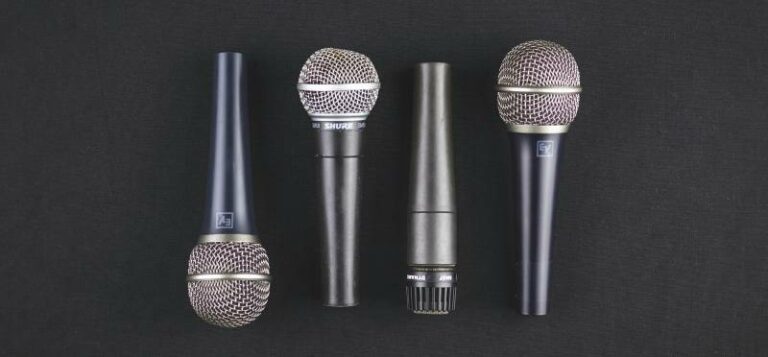
First of all, find a great mic that sounds great for your voice. You can find $100 mic that will sound awesome. Just try different mics. Also, you need a DAW and an audio interface. Choose which one you like and that’s it. There are Focusrite cards which are awesome and cheap.
I think every artist should have this setup, just for rehearsal or preparing a studio session.
Then choose the largest room in your house.
Cause if the size is small you will have a lot of problems with early reflections and interference. It will ruin your sound.
Place your mic at the center point. Try to place some mattresses at your side view. It can help to absorb some late reflections.
Use a pop filter to avoid booms and pops at your recording.
Then adjust your position. You should be 30 cm away from your mic, it can prevent proximity effects. That’s when vocals are muddy and bright at the same time. It’s a really bad sound. So now you stay like this. Adjust your gain. Avoid clipping! Clipping is an awful thing that you cannot fix at the mixing stage. The highest level of input must be -6 dB, average level is -12 dB. This is a perfect input. Perfect, now you can record your vocals. I have one great secret about recording vocals) Put autotune on to record into your daw. Adjust key, tonality. It really helps. So you record your vocals and can listen to it already edited. Here you can understand what is happening, if the autotune makes a wiuwiu sound then you need to re record it, if everything is ok then you can go forward. It prevents a lot of problems at the editing stage. There are a lot of cases when we recorded vocals, everything seemed ok, but when you start editing – everything is going wrong. Vocals are distorting or starting to sound bad for some reason. So when you record and listen with auto-tune you can be confident – everything will be fine) with awesome techniques.
Then use recording vocal technique. You can find it on YouTube. It’s double take, vocal harmonies, ad-libs etc. It will really support your song.
Then render your vocals and put it on a multitrack session.
Awesome, you’ve done a great job! Now you need to just mix and master it.
This is a really important thing. A mix can make or break your song.
So find a really experienced engineer. Send them a multitrack session with a reference you like, and you’re almost done!
You can do revisions etc., but every time compare your mix with industry music, don’t believe just naked ears. You might not be experienced enough for it. You should compare your track. This is what great producers do. Your track must be as good as the whole industry. Great and loud.
The final step is a mastering. In most cases, your mixing engineer can do it. It’s the easiest way.
That’s it! Now you have an industry quality track done at your home! You can send it to every label, every streaming platform, use it for live performance, share with listeners.
| Constraint | What it really limits | What to do |
|---|---|---|
| Room acoustics | Every decision you make, because you decide on what you hear. | Treat first reflections and corners before buying anything else. |
| Reference points | Knowing what finished sounds like. | Compare against released tracks at matched loudness, constantly. |
| Objectivity | Judging your own work after weeks with it. | Breaks between stages, and outside ears for releases. |
| Tool fluency | How fast an idea becomes a decision. | Learn few tools deeply rather than many shallowly. |
| Arrangement | Whether a mix is even possible. | Remove parts. Space is the resource. |
| Equipment | Least, past a competent interface and one good mic. | Stop upgrading and start finishing. |
When the track is ready for the final stage, our engineers handle mixing and mastering from $133 per song, 2–3 days per song, 6 revision rounds included. Prices for every service are on the pricing page.
Industry quality at home — FAQ
Can I really make industry-quality music at home?
Yes, and plenty of released records are. The constraints are acoustics and judgement, not equipment — both of which are addressable without a large budget.
What holds home productions back most?
The room, followed by arrangement. Both are invisible in a way gear is not, which is why they get addressed last and heard first.
How much gear do I need?
An interface, one good microphone, headphones and a DAW. Past that, acoustic treatment returns more than any further purchase at the same price.
How do I know if my music is competitive?
Compare against released tracks in your genre at matched loudness. If yours sounds smaller at the same measured level, the difference is usually arrangement or low-end control.
Should I hire someone for mixing?
For releases, it is usually the highest-return spend — mainly for the objectivity, which is the one thing you cannot buy or practise your way to on your own material.
How long does it take to get good?
Months to become competent, years to master, and it scales with how many songs you finish rather than how long you spend on each. Finishing is the teacher.
Before the mix: the part that is yours. Most of what a mix spends its time fixing was decided long before the session reached us — sound selection, arrangement, the way things were recorded. When those decisions stop repeating the same mistakes, the record is better before anyone touches it, and so is what we can do with it. That is what our production course is: 21 modules on the decisions that get made before the mix, taken from eleven thousand client sessions.
Send us a song you are working on
A rough demo is fine — it does not need to be mixed. A named engineer listens on studio monitors and writes back exactly what is holding the track back, and what to do about it.
- Usually within two working days
- No card, no obligation
- 11,000+ projects behind the answer
Order Complete Mixing and Mastering What it includes All prices