
Short answer: hip-hop mixing is decided by two relationships — 808 against kick, and vocal against everything else. Get the low end to hold a single fundamental, keep the lead vocal forward and dry enough to feel present, and the rest follows. The genre also survives loudness normalisation better when the 808 has harmonic content rather than pure sub.
Hip-hop started in New York and now runs through most of the charts. It is also one of the genres we mix most often. This guide walks through how a hip-hop mix and master get built: the 808 against the kick, the lead vocal against the hats, loudness for streaming, and what to prepare before the session. If you would rather hand the whole job to an engineer, that is our complete mixing and mastering service.
What a finished hip-hop mix should sound like
Balance. You can hear every element, and the record holds up next to commercial releases in the same playlist.
Powerful 808 bass and kick drum. This is the base of the genre. Both stay clear and hit hard without fighting over the same space.
Clear and charismatic vocal. Cleaned up, upfront, and easy to follow word for word.
Impact from the first second. The intro already sounds finished, because that is where listeners decide whether to skip.
Competitive level. Loud enough to sit with current releases, without the distortion you get from forcing it.
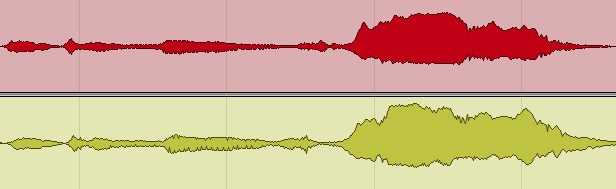
Our before/after samples show what that means: raw and finished versions of the same tracks.
 Mastering hip hop for a streaming platform
We also master hip-hop songs for release on different platforms, particularly, for Spotify and iTunes. Each streaming service has different requirements for master records and normalizes songs differently. We prepare songs professionally so they could sound perfect on the platforms.
Mastering for iTunes, we create the record according to the requirements of Apple Digital Masters. Major Mixing is on ADM providers list, we have all needed certifications. Having mastered your hip-hop song for iTunes with us, you will be able to receive an Apple Digital Master badge.
How do I get my hip-hop song mixed and mastered?
 You can do it yourself using the steps below, or send it to an engineer. With us, you upload the stems, a demo and a reference track, and the finished song comes back in 2–3 days per song.
The order form shows the exact price before you pay, and 6 revision rounds are included, so anything you want changed in the mix gets changed. Prices for every service are on the pricing page.
Why hip-hop is harder to mix than most genres
This unique genre needs the most professional techniques for mixing and mastering. Because of its aggressive and rich sound, hip-hop is very vulnerable to sound fighting, masking, and creating a mess in the record. Some other genres that may have a moderate bass sound, and a clear, free place for vocal frequencies will have a simpler mixing procedure, but not hip-hop. That is why the low end and the vocal take most of the time in a hip-hop session.
Hip-hop is a big share of the sessions we receive, so we hear the same problems over and over.
Over time that turned into a fairly fixed order of work: get the low end clear first, put the vocal on top of it, then master loud without losing the 808. The sections below follow that order.
How the 808, vocals and hats get mixed
Here is what happens in a typical hip-hop session, one element at a time.
Mixing 808 bass and kicks
 The sound of 808 bass is huge and kicks are also big, so the question is how to set them correctly in balance so that they won’t fight with each other.
Well, at first, we use equalizer and other plugins to clean the bass and kicks and make them more powerful and substantial. We remove the frequency ranges that are not needed for them, creating more room for other elements in the mix.
Then we check if bass and kick can stay in separate frequency bands. Rarely, but sometimes it happens, that by removing the bottom frequencies of the kick and the top frequencies of the bass, we can manage to separate them.
If the frequency bands of these instruments overlap, and we can not separate them, other tricks must be used for creating space for them. Because we know that waves with overlapping frequencies can resonate positively, creating louder spots, they can also resonate negatively, destructing each other, or they can just mask each other. In either way, you’ll not receive a piece of clear, beautiful music.
The general rule for processing 808 bass and kicks is to make the bass quieter at the time spans when the kick hits. We choose the way to work with the beats depending on the song, but usually, we pick one of the following:
- We edit the 808 track manually, creating spaces for kicks to hit
- Use sidechain compression
- Use multiband sidechain compression
Sidechain compression is a type of compression that affects the instrument depending on the volume of another instrument. In our case, the sidechain compression we use will affect the 808 bass depending on the volume of the kicks. So the bass will be made quieter when the kick becomes louder. This will create room for kicks.
Multiband sidechain compression is the most sophisticated approach and we use it most often. This is a frequency-specific compression, that applies the effect only to a certain frequency band. In our case, we choose the band for the bass that interferes with kicks the most, the lower frequencies, and put sidechain compression on it. This unites the bass and the kick, and at the same time creates space for the kick.
The goal is to have the bass and the kick integrated and form a clear, consistent harmony.
 Preparing vocal track
First, we work carefully with the vocal. The lead vocal is the central part of the mix, it’s mixed in mono and placed in the center. What we do:
- Remove unwanted frequencies from the vocal
- Perform de-essing and cleaning
- Enhance, enrich the vocal greatly with various plugins and move it to the front
Then we prepare backing vocals. We move them to the sides so that they create the surrounding and width.
Mixing vocals and hats
Another challenge when mixing hip-hop songs is to unite the expressive hats with the vocal. The high-end frequencies of the vocal are emphasized, the voice is bright, loud, and compressed, and the loud hats fall to a similar frequency range.
Working on the vocal, you should make it very upfront, distinct and clear. As in rap, words are important in hip-hop, and so is clarity. We use compression, equalizer, and other plug-ins on the vocal track to make it upfront in the mix, loud and clear.
The hats will interfere with the vocal, so, similar to working on bass, you’ll need to use equalizer or sidechain compression to achieve a clean and distinct sound on the high-end.
Besides that, for mixing hip-hop, we may use all the plug-ins, effects, and tricks that we use for mixing pop music, or other genres. The majority of the popular songs now tend to acquire some hip-hop traits, and modern hip-hop also got influenced a lot by pop music.
Things we keep in mind while mastering hip-hop
As low and high frequencies are amplified, they are highly susceptible to distortion while mastering, and this is what a mastering engineer has to watch most closely. At the same time, if you suppress bass and vocal frequencies to process the record without the risk of distortion, you can lose the emphasis on 808 and vocal, and this will ruin the song. It should be mastered loud, keeping the high and low ends elevated, but without distortion.
Another problem for hip-hop mastering is that highly elevated low and high ends, together with the aggressive loudness, will not sound well on every device. The desired LUFS for hip-hop mastering is high. Consumer-level speakers are simply not designed to reproduce the overamplified high and low ends and will distort the sound. As most of the audience will probably use consumer-level speakers, we consider the equipment limitations while mastering hip-hop music, making the song sound as good as possible for every device, not only for a professional speaker system.
As a result of mixing and mastering hip-hop, we receive a clean but loud song, where the bass and kick are in harmony, and at the same time, hats don’t mess with the vocal. The high-end and low-end frequencies are emphasized greatly. And the overall loud and powerful song does not contain unwanted distortion.
- Usually within one working day
- No card, no obligation
- 11,000+ projects behind the answer
How do I prepare my hip-hop song for mixing and mastering?
If you have this question, it’s awesome! Because it means that you are trying to create something amazing, an artwork, that will inspire people.
The song production includes certain steps. Each of which has to be done well for the song to become a potential hit.
- Creating a song idea
- producing music (or beat)
- Writing lyrics
- Rapping or singing
- Recording
- Mixing
- Mastering
- Release
Writing a hip-hop song
Hip-hop is a wonderful genre, using which you can tell a whole story with the lyrics. By writing the lyrics your audience can relate to, you increase the chances for your song to become loved and appreciated.
The core element in a hip-hop song is the hook in the lyrics. It can be in the chorus or in the verse as well. You need to create a catchy line or lines your fans will love and sing along to.
Many people appreciate hip-hop songs for their ability not only to open up their everyday struggles but also give them the strength to keep going. And what gives hope and strength to people is just realizing that they are not alone in the struggle, that someone else has gone through the same things and can relate to the experience.
Rap and hip-hop songs are excellent means to tell the story in the lyrics. It doesn’t mean though that you have to write about yourself, put everything in your bio, or make your bio into a song. Remember that the honest artist is not the one who tells everything about himself in the performance, but rather the one who gives all of himself to the performance.
 The quality of the music
Whether you choose a ready beat, or create it yourself, all the sounds you use have to be of the highest quality. They must sound great without effects to give more scope for shaping them with different plugins while mixing.
Hip-hop is all about rhythm, kick and bass. The beat must be as engaging, energetic, and even aggressive as possible. If you don’t catch yourself moving your head with the beat, your fans won’t do it either.
If you have the idea but not the beat, our music production service can build the instrumental from your demo.
 Recording a hip-hop song
We live in the time when everyone can create a recording studio in their bedroom and then share their creation with the world. Where there is a will, there is a way. But not many artists know that the high quality of recording is one of the key elements in creating a good song.
There is a rule in music production that states that most of the mistakes can only be corrected on the level they appeared. This means that if you make a mistake at the stage of recording and use a bad microphone, for example, then nobody will be able to correct the poor quality of your music with mixing or mastering.
Use the best equipment, or record in a professional studio to produce the song that people will love and appreciate.
Rapping the lyrics well can be tricky, it requires skills and practice. It’s usually the unique individual style of rapping and intonations that do the trick and get in the hearts and minds of the audience. Practice and create your perfect style within the genre.
Mixing and mastering your song
 After everything is recorded, the song must be mixed and mastered. Working with hip-hop is challenging but rewarding, because, when done correctly, it results in a possible top-chart hit.
Almost all popular music right now has some hip-hop traits. Here are some of the features that have to be dealt with while mixing and mastering hip-hop:
- Heavily compressed kicks
- The 808 bass
- Loud hats
- Amplified low-end and high-end frequencies
- Upfront and emphasized vocal
It is a challenging genre. What you don’t want to get after mixing and mastering, and, by the way, is quite easy to receive without using professional hip-hop mixing studio, is a muddy sound, masked vocal, and too loud, distorted bass. The mix can easily build into a chaos of loud instruments and voices where heavy 808 basses can even damage the speakers.
Artists can mix their songs themselves, but to learn how to match the industry standards takes years. You may know what sound qualities you wish to obtain as a result of mixing hip-hop, but what plugins to use to achieve it? What settings to apply? Here works the similar rule as in every other industry – everything should be done by a specialist in this particular field. Otherwise, the quality of the product will suffer.
If you don’t want to spend those years, give the session to an engineer who mixes hip-hop regularly. If you want to learn it yourself, start with the 808 and the vocal, because that is where most home mixes go wrong.
Why the mix matters so much in hip-hop
For the last several years, hip-hop has been taking the top places of music charts. Leading in the USA charts since 2017, it is also incredibly popular all over the world. Hip-hop has greatly influenced many other genres, and of course, pop music, as well.
With that much competition, a mix that falls apart on phone speakers or in the car gives a listener an easy reason to skip.
| Element | What the genre needs | The usual failure |
|---|---|---|
| 808 | One clear fundamental with audible harmonics above it. | Pure sub with no upper content — disappears entirely on phones. |
| Kick vs 808 | One owns the fundamental; the other gets shaped around it. | Both occupying 50–80 Hz, so the low end turns to mush. |
| Lead vocal | Forward, present, relatively dry. | Buried under the beat, or drowned in reverb that softens the delivery. |
| Ad-libs | Wide and lower, framing the lead rather than competing. | Same treatment as the lead, so nothing stands out. |
| Hats | Crisp and often wide, but controlled in the top end. | Harshness that gets worse after limiting. |
| Master | Loud but with the 808 still intact. | Limiting that flattens the low end, which is the one thing the genre can’t lose. |
Rows one and two account for most hip-hop mixes that don’t work. If the low end is unclear, nothing above it will save the record.
Rather have an engineer mix and master it? Complete mixing and mastering starts at $133 per song, back in 2–3 days per song, with 6 revision rounds included. Already have a finished mix? Mastering on its own is $50.
Hip-hop mixing and mastering FAQ
How do I stop the 808 and kick fighting?
Decide which one owns the low fundamental. Usually the 808 takes it and the kick gets a shorter, higher click that cuts through. Sidechain compression on the 808 triggered by the kick is the standard tool, but arrangement often solves it more cleanly.
Why does my 808 disappear on phone speakers?
Because phones can’t reproduce much below 200 Hz — they rely on harmonics to imply the fundamental. Saturating the 808 adds those harmonics so the note is still perceived on small speakers. Our guide to mixing low end goes deeper.
How loud should a hip-hop master be?
There’s no fixed number. Most current hip-hop is mastered loud, often around -9 LUFS, but the right level is the one where the 808 and the vocal still hit. Spotify’s -14 LUFS is only where it plays music back, not a target.
Should hip-hop vocals be dry or wet?
Drier than most genres. Presence and intelligibility matter more than space, since the delivery is the record. Short delays and small ambience usually work better than long reverb tails.
How do I prepare a hip-hop session for mixing?
Separate stems for 808, kick, drums, melody and each vocal layer — lead, doubles and ad-libs on their own tracks. Bypass master bus processing. Our stem export guides cover the full spec.
Do you mix hip-hop?
Yes — it’s one of the genres we work in most, alongside credits with Universal, Warner and Spinnin. Hear it first on our hip-hop before/after samples — raw and finished versions of the same track.
Stuck on a mix?
Send it as it is — a rough demo or a mix in progress. Max Rayden or Ivan Taiga listens on studio monitors and writes back exactly what is holding the track back, and what to do about it.
- Usually within one working day
- No card, no obligation
- 11,000+ projects behind the answer